Perimenopause and Your Skin: What's Actually Happening
Perimenopause and Your Skin: What's Actually Happening

A patient came to me last fall and told me her face had stopped responding to her skincare.
She'd been using the same regimen for fifteen years. She had not changed her diet, her sleep, her stress, or her products. But somewhere over the last eighteen months her skin had become dry in a way it had never been, slightly looser around the jawline, and reactive to products she'd used her whole adult life without incident. She kept asking what she was doing wrong.
She wasn't doing anything wrong. She was 47. Her estrogen was dropping. Her skin was telling her, in the only language it has, that the underlying system had changed.
This is one of the most common consultations I have, and one of the most poorly explained. The patient knows something has shifted. She has been told, in vague terms, that it's hormones. She has been sold serums and procedures that don't address the root. She has not been told, with any clinical specificity, what is actually happening underneath her skin or what would actually help.
This piece is about both.
The hormone that built your skin is the one that's leaving
For most of adult life, estrogen is one of the primary drivers of skin quality. It's not the only one — but it plays an outsized structural role.
Estrogen stimulates collagen production. It maintains skin thickness. It supports hyaluronic acid synthesis, which is what keeps skin hydrated from within. It influences the function of sebaceous glands, the resilience of the barrier, and how efficiently the skin retains moisture. The face you've had through your thirties and into your forties was substantially built and maintained by your estrogen levels.
Perimenopause is the years-long window — often beginning in the early-to-mid forties, sometimes earlier — during which ovarian estrogen production becomes erratic and then begins a sustained decline. Menopause itself is the endpoint: twelve consecutive months without a menstrual period. But the skin changes don't wait for the endpoint. They begin during the perimenopausal years, when estrogen is already fluctuating and trending downward.
This is why the changes feel sudden. They aren't sudden. They are the visible expression of a hormonal shift that has been underway for some time before the skin couldn't compensate any further.
The measurable changes
The literature on what happens to skin during the menopausal transition is more specific than most patients have been told. Several changes occur in a relatively predictable sequence.
Collagen loss accelerates. Studies suggest women lose approximately 30% of skin collagen in the first five years after menopause, with a slower but continued decline afterward. This is a dramatic structural change. Collagen is what gives skin its firmness, density, and resistance to gravitational descent. A 30% loss is something you can see in a mirror.
Skin thickness decreases. Independent of collagen content, the dermis itself becomes thinner. This is part of why skin during this transition can look more translucent, why veins become more visible in certain areas, and why fine lines that were once shallow appear more pronounced.
Hyaluronic acid synthesis declines. The skin's ability to hold water from within drops. Patients describe this as their skin "drinking up" moisturizer that used to last all day, or as a persistent papery dryness that didn't exist before.
Barrier function weakens. The skin becomes more reactive — more prone to redness, more sensitive to ingredients that were previously fine, slower to recover from minor irritation. Patients often blame "new sensitivities" on products. The product usually didn't change. The barrier did.
Vascular reactivity increases. Flushing, persistent redness, and rosacea-pattern symptoms can emerge or worsen during this window. The vascular system in the face becomes more reactive to triggers — heat, alcohol, stress, certain foods — that it tolerated previously.
Pigmentation patterns shift. Existing pigmentation can darken. New patches can emerge. The skin's ability to regulate melanocyte activity becomes less stable.
These changes occur together, not in isolation. The patient who comes in concerned about dryness almost always has barrier reactivity, reduced firmness, and shifting pigmentation happening at the same time. She just hasn't named all of them yet.
Why standard advice doesn't work in this phase
The skincare industry's standard response to aging skin is more product. Add a vitamin C serum. Upgrade your retinol. Try a peptide. Layer in a hyaluronic acid serum. Get a richer moisturizer.
In a perimenopausal patient, this advice is not wrong exactly — it's just incomplete in a way that misses the actual problem.
Topicals can support skin function. They cannot replace a hormone. A vitamin C serum on a barrier that has been compromised by estrogen loss is being applied to a substrate that doesn't behave the way it did when the same product worked for her at 38. A retinol on thinning skin is more likely to cause irritation than it was on thicker skin. A hyaluronic acid serum can hold moisture at the surface but cannot replace the deep dermal hyaluronic acid that the body is no longer making at the same rate.
This is the part that gets missed: in perimenopause, the skin is asking for something the bottle can't fully provide. Skincare can be one component of the response. It cannot be the whole response.
What actually helps
A perimenopausal patient's skin plan should be built in layers, in a specific order, with a clear understanding of what each component does and does not do.
1. Address the systemic picture honestly.
For some patients, hormone therapy is appropriate — and where it's appropriate, it changes the conversation. Systemic estrogen replacement (when clinically indicated and properly prescribed) does what topicals can't: it restores the underlying biological signal that maintained skin quality in the first place. Patients on appropriately prescribed hormone therapy frequently report skin changes that no skincare regimen alone would produce.
This isn't a recommendation for everyone. Hormone therapy is a clinical decision with its own considerations, contraindications, and individual variables. But it is part of the honest answer to "what helps perimenopausal skin," and patients deserve to know it exists as an option to discuss with a qualified provider.
2. Rebuild barrier function before chasing anti-aging.
A compromised barrier is a foundation problem. Aggressive actives — strong retinols, acids, brightening agents — on a reactive barrier produce more irritation than improvement. The first step in a perimenopausal skin plan is often to simplify, support the barrier with appropriate ceramides and gentle hydration, and let the skin stabilize before reintroducing actives.
This is counterintuitive to patients who feel their skin is changing and want to do more. The right answer is often to do less, more carefully, for a window of time.
3. Use treatments that signal the body to make its own collagen.
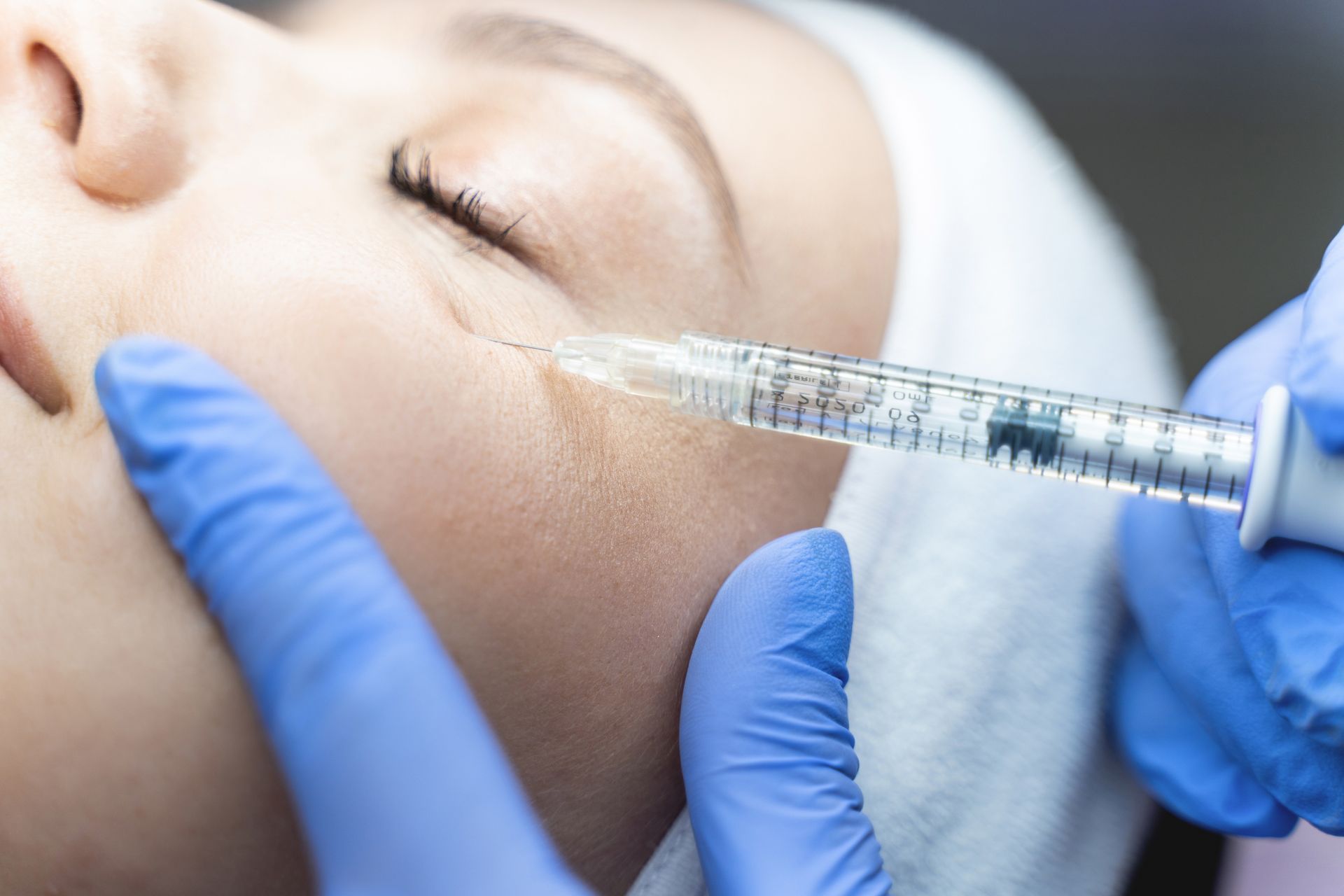
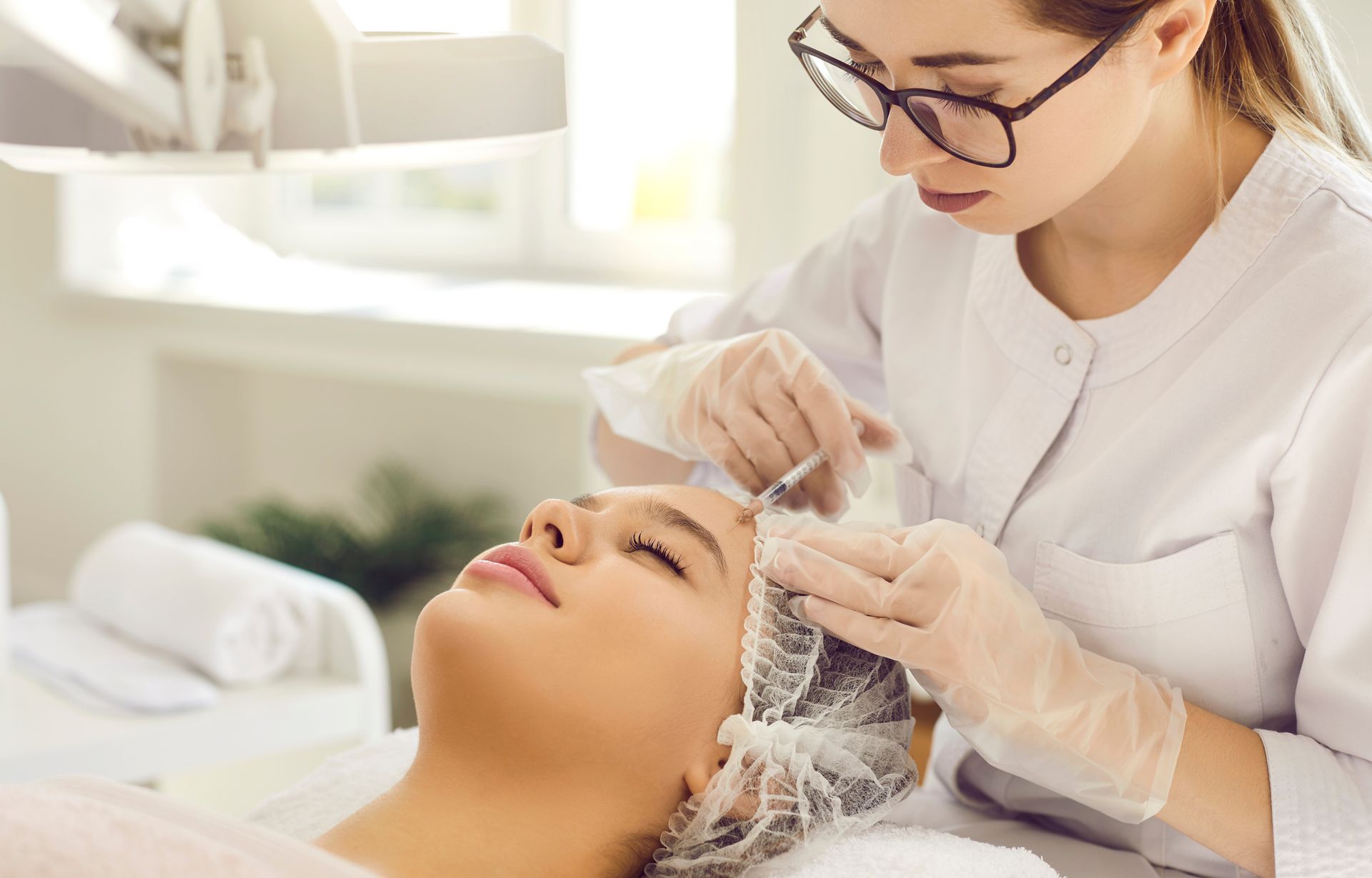
This is where regenerative treatments earn their place in the plan. Biostimulators — Sculptra and similar — signal the body to produce new collagen. Microneedling with radiofrequency does the same through controlled injury and thermal signaling. Polynucleotides support tissue regeneration at the cellular level.
These treatments work with the body's own biology rather than adding synthetic volume. In a perimenopausal patient who is losing collagen, that distinction matters. The goal is not to inject the face full of replacement product. The goal is to encourage the dermis to do more of the work it used to do.
4. Address structure before surface.
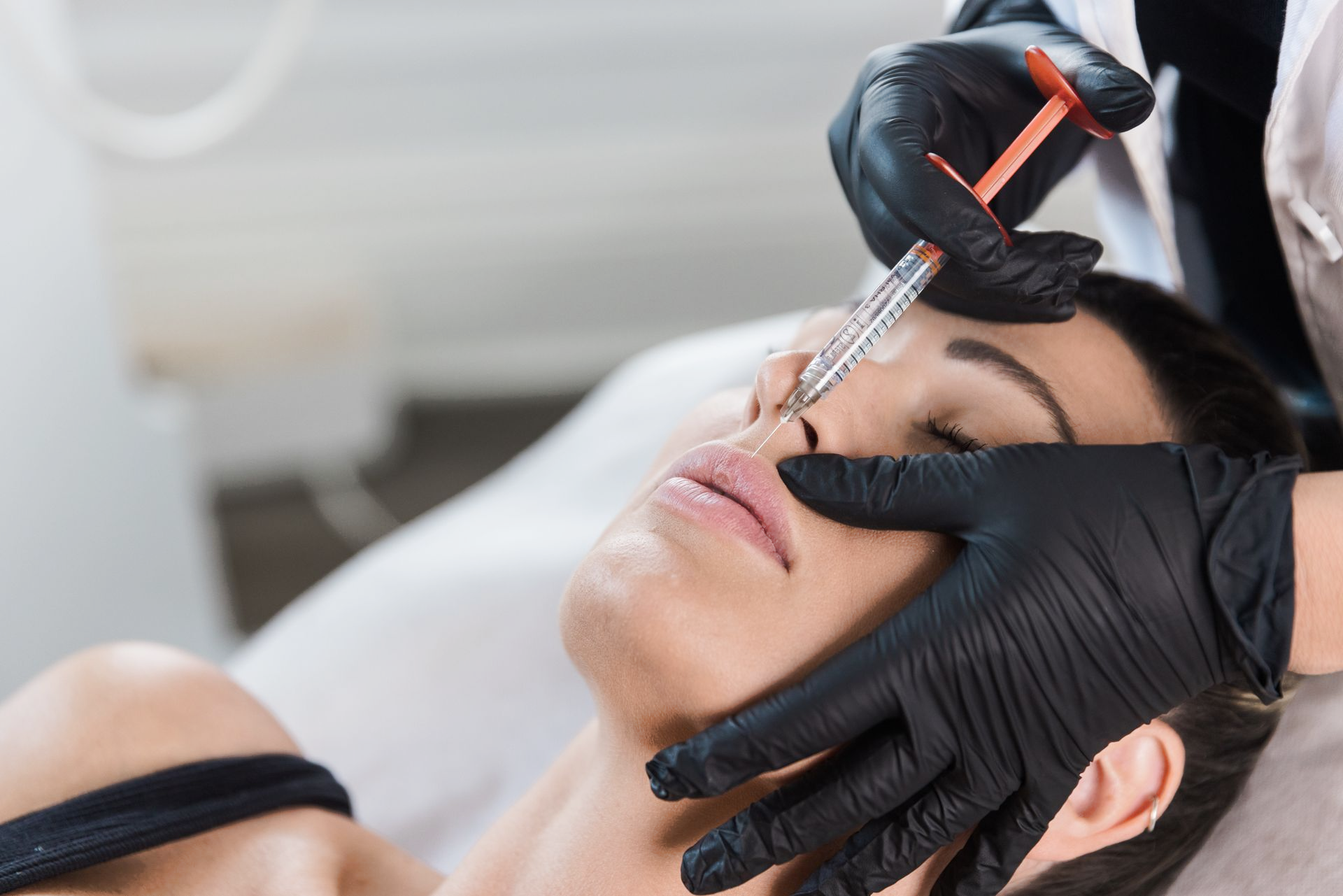
Volume loss in this phase is real, but it's rarely uniform. Specific structural support — placed conservatively in foundational compartments — can restore the architecture that holds the skin envelope in place. The goal is structural, not cosmetic in the typical sense. The patient should not look filled. She should look like the skin is fitting properly again.
5. Treat skin texture and tone with appropriate energy-based therapies.
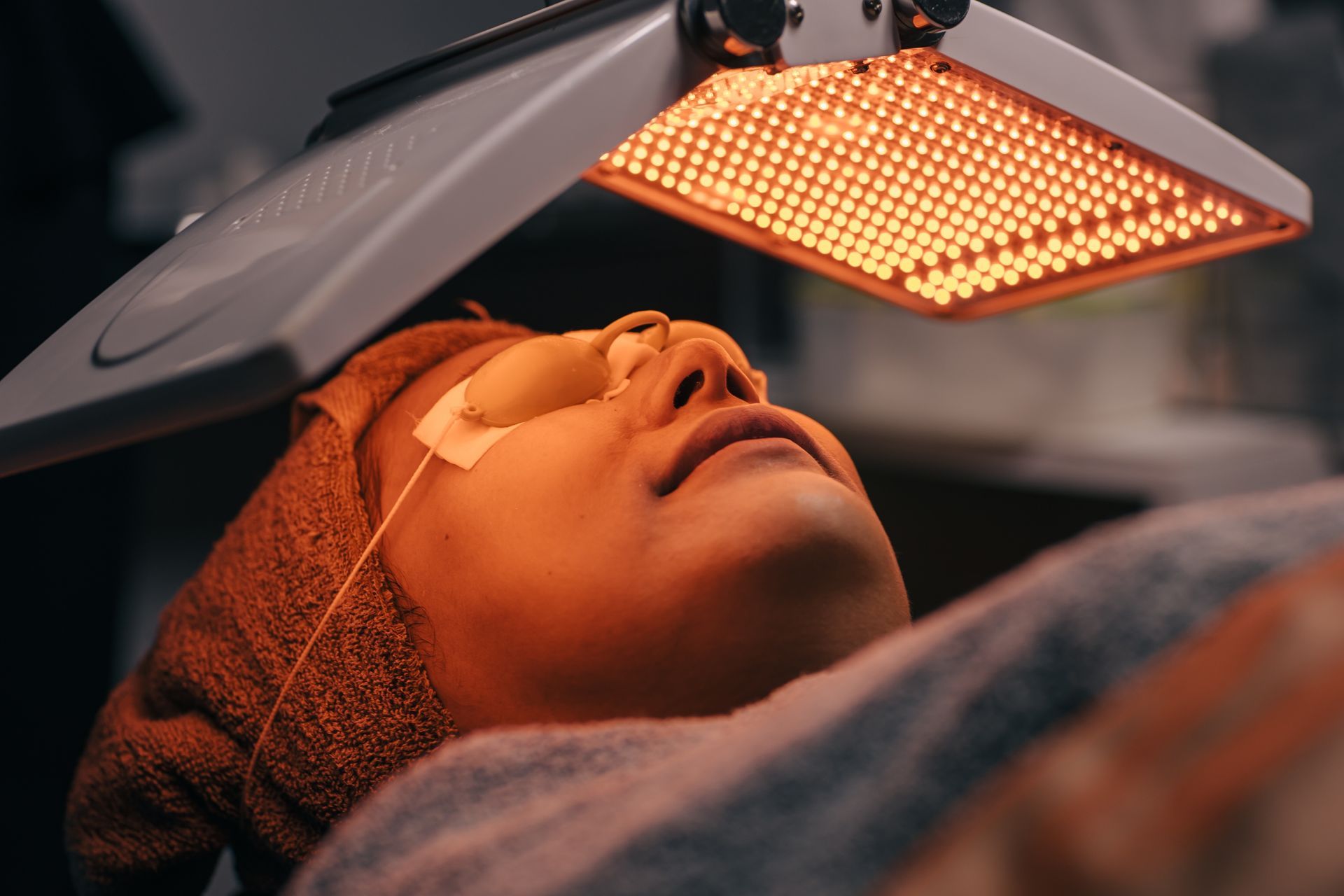
Lasers and light-based treatments can address the pigmentation changes, vascular reactivity, and textural shifts that emerge in this phase. The selection matters — some skin in this window doesn't tolerate aggressive resurfacing well, and the right device and settings for a 50-year-old are not the same as for a 30-year-old.
The mistake most patients make
The mistake is treating perimenopausal skin as if it's the same skin they had ten years ago, just with more wrinkles.
It isn't. It's a different organ, hormonally, structurally, and functionally. The plan has to account for that.
A patient who arrives wanting "a peel and some Botox" because that's what worked at 38 is asking for the same tools applied to fundamentally different tissue. The result is often disappointing, sometimes irritating, occasionally counterproductive.
The patients who do well in this phase are the ones who accept that the conversation has changed. Not for the worse — just for the more honest. Their skin is asking for a more integrated response than it was. Once they get one, the results are often better than they expected.
What to ask before your next consultation
Two questions, particularly if you're in your forties or early fifties.
First: Do you assess hormonal context when you build a skin plan for patients my age?
The right answer is yes — at minimum, asking about menstrual changes, sleep, mood, and timing of skin changes. A clinic that builds the same plan for a 32-year-old and a 52-year-old without considering hormonal status is missing the actual driver.
Second: What's your approach to perimenopausal patients specifically, beyond topical skincare?
The answer should mention some combination of barrier support, regenerative treatments, structural assessment, and an awareness of when systemic factors (hormones, sleep, metabolic health) need to be part of the conversation. If the answer is essentially "we recommend a stronger retinol," you are being given a product strategy, not a clinical assessment.
The honest framing
If you are in your forties and your skin has started behaving differently, you are not imagining it. You are not doing anything wrong. The product you've used for fifteen years is not "less effective now" because it was secretly mediocre all along. It worked on skin that had different biology. It is now being applied to skin that doesn't.
This is one of the most significant transitions a person's skin will go through, and it deserves a clinical response that meets it where it actually is. That response usually involves several components, not one. It often involves rethinking the regimen rather than adding to it. And for many patients, it involves a conversation about hormones — not as a cosmetic intervention, but as recognition that the face is downstream of the body, and the body has changed.
The right place to start is an honest assessment. Not a serum. Not a single treatment. An evaluation of what your skin is doing now and what your particular version of this transition is asking for.
Sonia Vilos is a Nurse Practitioner and the founder of bespøke by SkinAlchemy, a medical aesthetics clinic in London, Ontario. Her clinical practice includes bioidentical hormone therapy alongside structural aesthetic and skin care. She trained in facial anatomy and injection technique under Dr. Sebastian Cotofana, Dr. Arthur Swift, Dr. Thuy Doan, and Julie Horne across programs in four countries. She is the supervising Medical Director to independent nurse injectors across Ontario. Complimentary consultations are available at skinalchemy.janeapp.com.