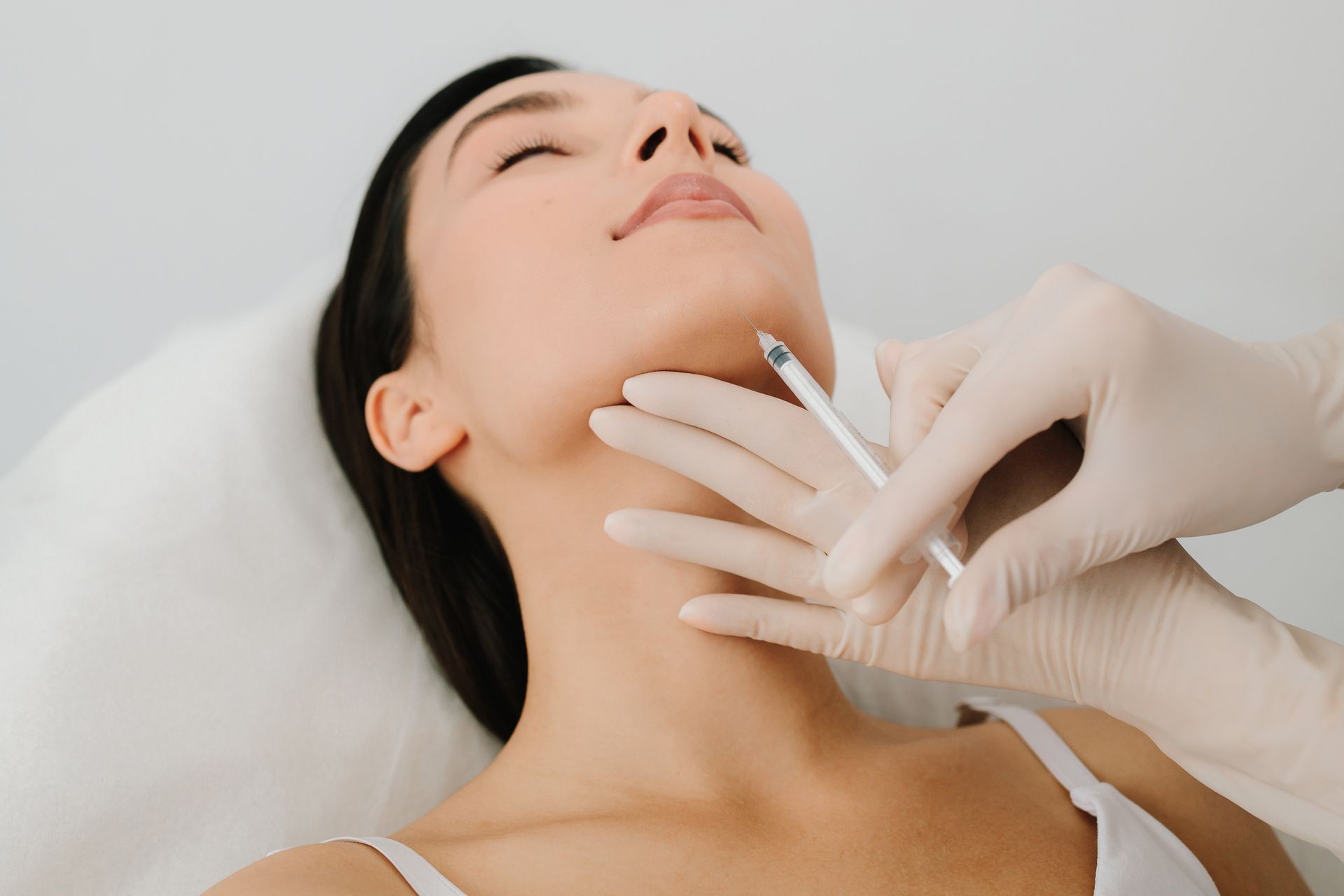
Sculptra, PRF & Biostimulators Explained: Why 'Slow Beauty' Outlasts Traditional Fillers in Ontario
The face is architecture. Aging is structural. This foundational principle changes how we approach every treatment at Bespøke by SkinAlchemy—and nowhere is this more evident than in regenerative aesthetics. Unlike traditional dermal fillers that instantly add volume, biostimulators work with your body's own biology to rebuild what time has diminished: collagen, tissue integrity, and structural support.
If you've been researching Sculptra, PRF, or heard the term "biostimulator" and wondered whether waiting months for results is actually worth it, this guide is for you.
The Shift from Instant Gratification to Structural RegenerationHyaluronic acid as temporary scaffolding vs. structural repair
- The "filler fatigue" phenomenon: needing more volume every 6-9 months
Traditional hyaluronic acid fillers have their place. They provide immediate volume, predictable results, and reversibility. But they're fundamentally decorative—they fill space without addressing why that space emptied in the first place.
Consider what actually happens as your face ages: bone resorbs (particularly in the maxilla, mandible, and orbital rim), ligaments loosen, fat pads descend and atrophy, and collagen production slows by approximately 1-2% annually after age 25. Traditional fillers address the symptom—volume loss—but not the underlying structural decline.
This is where regenerative aesthetics enters. Rather than adding foreign volume, biostimulators trigger your body's natural collagen synthesis, essentially rebuilding the dermal matrix from within. The result isn't instant fullness; it's gradual tissue regeneration that looks like your own face, restored.
Biostimulators Decoded: Understanding Your Options
- The "filler fatigue" phenomenon: needing more volume every 6-9 month
Sculptra (Poly-L-Lactic Acid)
Sculptra contains poly-L-lactic acid (PLLA) microspheres that, once injected, trigger a controlled inflammatory response stimulating fibroblast activity and neocollagenesis. The PLLA particles are gradually absorbed over months while new collagen forms in their place.
Ideal candidates: Patients experiencing generalized volume loss in temples, cheeks, and jawline who prefer gradual, natural-looking restoration over immediate dramatic change.
Treatment protocol: Typically 2-3 sessions spaced 4-6 weeks apart. Results begin appearing at 6-12 weeks post-treatment and continue developing for up to 6 months.
Longevity: Results last approximately 2+ years—significantly longer than the 6-12 months typical of hyaluronic acid fillers.
PRF vs. PRP: The Autologous Approach
Platelet-rich fibrin (PRF) represents the evolution of platelet-rich plasma (PRP) therapy. Both use your own blood's growth factors to stimulate tissue regeneration, but PRF offers distinct advantages.
The key difference lies in processing. PRP requires anticoagulants and spins at higher speeds, releasing growth factors immediately but briefly. PRF uses slower centrifugation without additives, creating a fibrin matrix that releases growth factors gradually over 10-14 days. This sustained release translates to prolonged collagen stimulation and tissue regeneration.
Best applications: Under-eye hollowing, skin texture improvement, fine lines, and increasingly, hair restoration. PRF pairs exceptionally well with microneedling (including Potenza RF microneedling) to enhance penetration and results.
The Anatomy-First Approach to Regenerative Injectables
At Bespøke, anatomy informs every decision. Before selecting any product, we assess the structural architecture of your face: bone density, ligament integrity, fat pad position, and tissue quality. This assessment reveals why volume has changed—not just where.
Understanding structural aging means recognizing that a hollow cheek might stem from bone resorption at the maxilla, descent of the malar fat pad, or both. Simply adding filler to the surface treats the appearance without addressing the cause. Biostimulators placed at the appropriate depth—often supraperiosteally, directly above bone—provide foundational support that respects your natural architecture.
This approach requires patience. Biostimulators don't offer the instant gratification of traditional fillers. Instead, results emerge gradually over 3-6 months as collagen synthesis progresses. The advantage? Friends and colleagues notice you look "rested" or "well"—not "done." The highest compliment, as we say, is silence.
The Psychology of Gradual Transformation
Slow beauty requires a different mindset. Patients accustomed to immediate results sometimes struggle with the waiting period inherent to biostimulators. Understanding what to expect helps manage this transition.
Month-by-Month Results Timeline
Week 1-2: Initial swelling from the treatment itself subsides. This is not your final result—the product hasn't yet stimulated collagen production.
Month 1-3: Collagen synthesis begins. You may notice subtle firmness, improved skin texture, and early structural changes. Progress is gradual and cumulative.
Month 3-6: Visible structural improvement becomes apparent. Natural fullness returns without the "filled" appearance that accompanies overzealous volume replacement.
Month 6-24: Maintenance phase. Results continue to refine, and longevity depends on individual factors including metabolism, lifestyle, and baseline collagen production capacity.
The psychological benefit of gradual change extends beyond aesthetics. Patients whose transformation unfolds slowly avoid the jarring adjustment—both personal and social—that accompanies dramatic overnight change. There's no explaining away sudden fullness or deflecting questions about "what you had done."
When to Choose Biostimulators vs. Traditional Fillers
Biostimulators and hyaluronic acid fillers aren't mutually exclusive—they serve different purposes within a comprehensive treatment strategy.
Biostimulators Excel When:
- Generalized volume loss affects multiple facial zones
- Long-term structural support is the goal
- Patient prefers gradual, undetectable improvement
- Repeated short-term filler cycles have become costly or unsatisfying
- The patient is building a "collagen bank" for proactive aging management
Traditional HA Fillers Remain Appropriate When:
- Precise, localized shaping is required (lip borders, nasolabial folds)
- Immediate results are necessary (event in 4 weeks)
- Reversibility is a priority for first-time patients
- Fine-tuning is needed after biostimulator foundation is established
Many patients benefit from combining both modalities strategically. A treatment plan might begin with Sculptra to rebuild foundational volume in cheeks and temples, followed by small amounts of HA filler for precise lip definition or tear trough refinement. This layered approach—structure first, refinement always—maximizes natural-looking outcomes while minimizing total product volume over time.
Cost Considerations: The Long View
Biostimulators require higher upfront investment than single-syringe filler treatments. However, cost analysis over a 3-5 year horizon often favours the regenerative approach.
Consider: A patient maintaining cheek volume with HA filler might require 2-4 syringes annually at $600-800 per syringe. Over three years, that totals $3,600-$9,600. A Sculptra protocol (2-3 sessions initially, with one maintenance session at year 2) might cost $2,500-4,000 total over the same period—while also improving skin quality and providing longer-lasting structural support.
Beyond economics, there's the tissue preservation argument. Repeated high-volume filler placement can stretch tissue over time, potentially creating dependency and altered facial dynamics. Biostimulators rebuild native collagen without stretching—a consideration for patients thinking decades ahead, not just months.
What to Expect at Your Consultation
Structure-first treatment begins with thorough assessment. At your consultation, we'll evaluate your facial architecture across multiple positions—seated, supine, animated, and at rest. This reveals how bone, ligament, and tissue interact dynamically, not just statically.
We'll discuss your timeline and expectations honestly. Biostimulators reward patience; if you're preparing for an event in six weeks, we'll recommend alternative approaches. If you're investing in how your face ages over the next decade, regenerative aesthetics aligns with that vision.
Every recommendation we make begins with bone, ligament, fat pad, and tissue. We don't change faces—we restore structure. The surface follows.
Anatomy informs every decision. art shapes the outcome
Regenerative aesthetics represents a philosophical shift in medical aesthetics: from adding volume to rebuilding architecture, from instant transformation to gradual restoration, from changing faces to understanding them.
This approach isn't for everyone. It requires patience, realistic expectations, and trust in the process. But for patients who value undetectable outcomes, long-term thinking, and results that honour their natural facial structure, biostimulators offer something traditional fillers cannot: authentic rejuvenation that ages as gracefully as it arrived.
Ready to explore whether regenerative aesthetics aligns with your goals? Book a complimentary Structure Assessment with Sonia Vilos, NP. We'll map your facial architecture, discuss your timeline, and create a treatment plan built on anatomy, proportion, and restraint—not trends.